


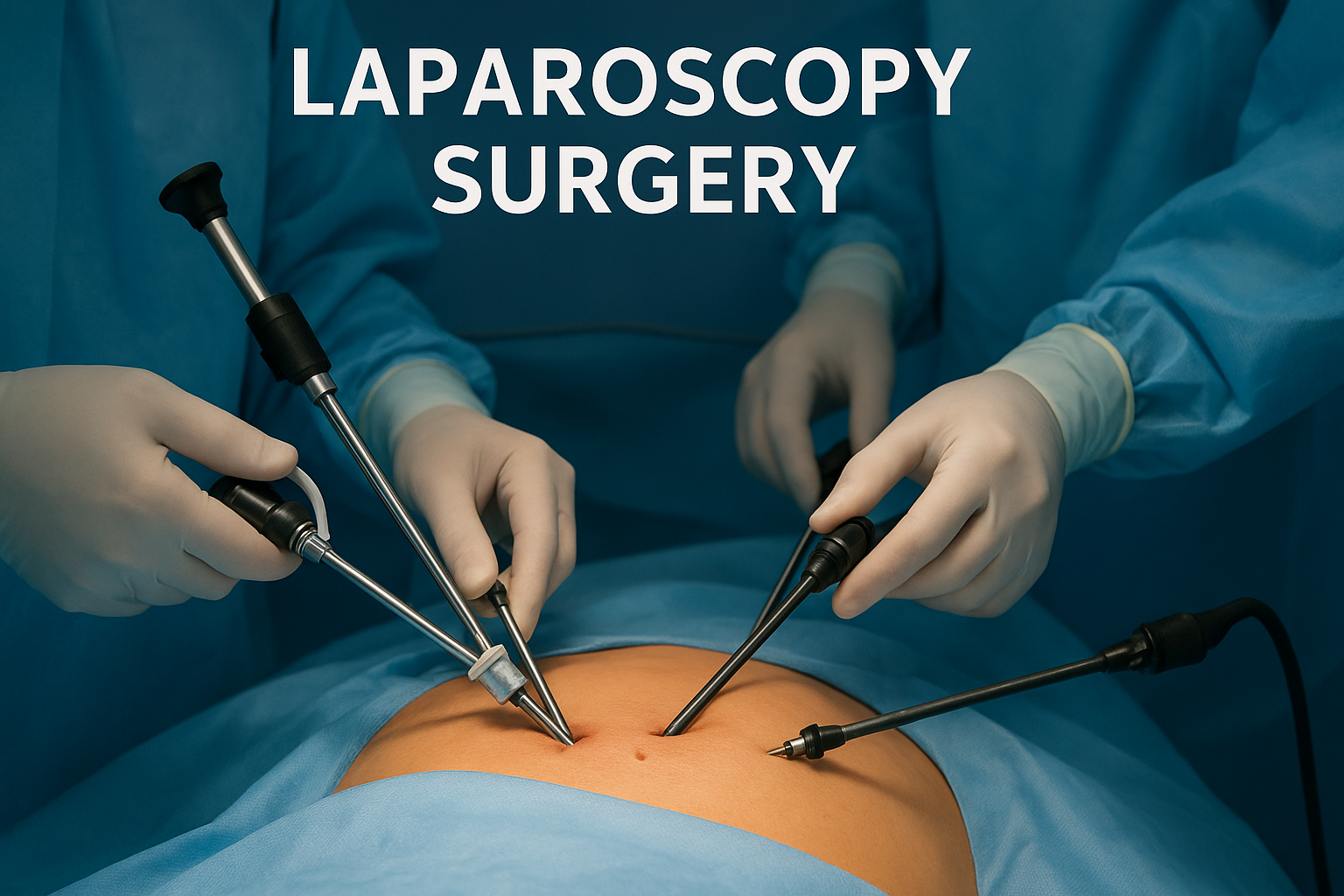
Laparoscopy surgery, also known as minimally invasive surgery, has become one of the most preferred surgical methods in modern healthcare. With smaller cuts, faster recovery, and reduced pain, it offers a safer and more comfortable experience compared to traditional open surgery.
In this article, we cover what laparoscopy is, how it works, benefits, risks, recovery tips, and why it is becoming the first choice for many patients.
What Is Laparoscopy Surgery?
Laparoscopy is a surgical technique where doctors make tiny incisions (0.5–1 cm) instead of a long cut.
Through these small openings, a thin tube with a camera—called a laparoscope—is inserted.
The high-definition camera provides a clear internal view on a monitor, helping surgeons perform the procedure with high accuracy.
Common Surgeries Done Through Laparoscopy
Laparoscopy is used for many abdominal and gynecology procedures, including:
- Gallbladder removal
- Appendix surgery
- Hernia repair
- Ovarian cyst removal
- Fibroid removal
- Endometriosis treatment
- Diagnostic laparoscopy
- Removal of abdominal tumors or cysts
These surgeries are now performed more often with laparoscopy than open surgery.
Top Benefits of Laparoscopy Surgery
1. Minimal Pain & Faster Recovery
Tiny incisions mean less pain and quicker healing.
2. Shorter Hospital Stay
Most patients go home within 24–48 hours, reducing hospital costs and discomfort.
3. Very Small Scars
The cuts are so small that scars often become barely visible over time.
4. Lower Risk of Infection
Smaller incisions reduce the chance of infection and complications.
5. Early Return to Work
Many people resume normal activities within a few days.
How Laparoscopy Surgery Is Performed
Here is a simple step-by-step overview:
- Patient receives general anesthesia.
- Small incisions are made on the abdomen.
- Carbon dioxide gas is used to expand the abdominal space.
- The laparoscope and surgical tools are inserted.
- The surgeon performs the procedure while watching the monitor.
- Gas is released, and the small cuts are closed with stitches or glue.
The entire process is safe, controlled, and minimally invasive.
Who Is an Ideal Candidate for Laparoscopy?
Most patients are suitable for laparoscopy unless they have:
Recovery After Laparoscopy Surgery
Recovery is usually smooth and faster than open surgery. Patients may feel:
- Mild abdominal discomfort
- Slight bloating
- Shoulder pain due to gas (temporary)
Most people return to daily tasks within 1–2 weeks depending on the surgery type.
Post-Surgery Care Tips for Faster Healing
- Avoid lifting heavy objects for 1–2 weeks
- Take prescribed medicines on time
- Keep the incision area dry and clean
- Stay hydrated and follow a light diet initially
- Report fever, redness, or unusual pain to your doctor immediately
Following these tips helps reduce complications and speed up recovery.
Is Laparoscopy Better Than Open Surgery?
For most cases—YES.
Laparoscopy offers:
✔ Smaller cuts
✔ Less pain
✔ Faster recovery
✔ Lower infection risk
✔ Better cosmetic results
However, in very complex cases, open surgery may still be preferred.
Final Words
Laparoscopy surgery has transformed the way many medical procedures are performed. With its minimally invasive approach and faster healing time, it is a safe and highly effective option for most patients.
If you are considering surgery, discuss the benefits of laparoscopy with your doctor to see if it is right for you.

